Image
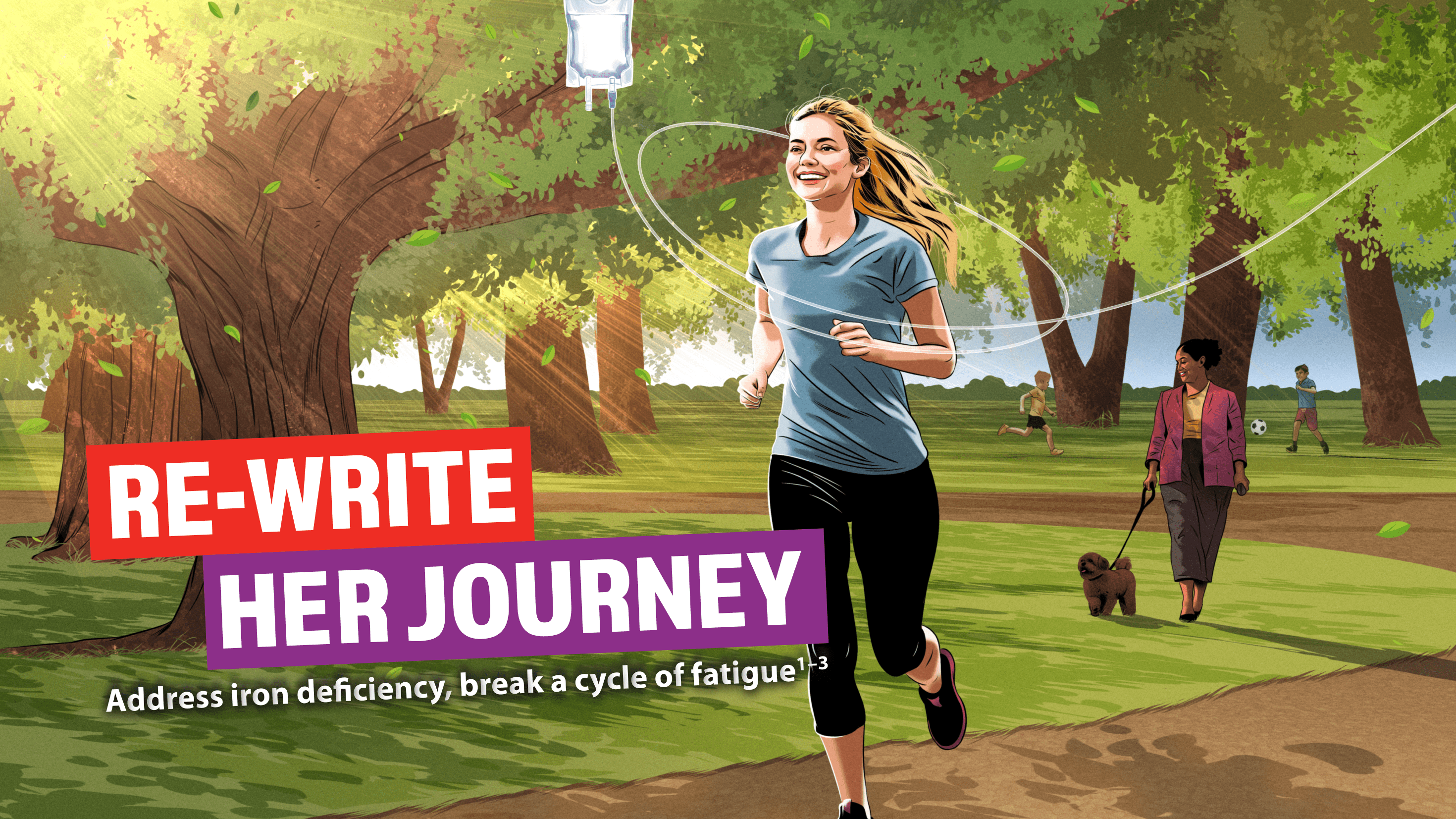
Banner image
tick marker

Ferinject® benefits

Ferinject® has been helping patients for over 15 years4 

heart icon

Benefits in women’s health

clock

Offers rapid iron delivery and repletion of iron stores4 

15 min clock

Can be administered in 15 minutes:4 

  • ≤1000 mg to adults and adolescents (≥14 years)
  • ≤750 mg (max. 15 mg/kg body weight) to children and adolescents (1–13 years) 
person icon

Helps address ID/IDA and is shown to enhance quality of life for women2–8 

Iron-deficient women: PREFER randomised study2
Study

A randomised, placebo-controlled, single-blinded, comparative superiority study assessing the efficacy and tolerability of Ferinject® vs placebo in 294 iron-deficient, premenopausal women with symptomatic, unexplained fatigue. The primary endpoint was the proportion of patients achieving a ≥1 point decrease in total Piper Fatigue Scale score from baseline to Day 56.2

Outcomes

A single infusion of Ferinject® improved fatigue, mental quality of life and cognitive function vs placebo.2

Heavy menstrual bleeding and IDA: RCT3
Study

A phase 3, open-label RCT evaluating efficacy and safety of Ferinject® vs ferrous sulphate in 477 women with anaemia, iron deficiency and heavy uterine bleeding. The primary efficacy endpoint was the proportion of subjects with a Hb increase of ≥2 g/dL after treatment.3

Outcomes

Ferinject® was more effective vs ferrous sulphate in correcting anaemia, replenishing iron stores and improving quality of life.3

Heavy menstrual bleeding and IDA: Open-label randomised trial5
Study

A multicentre, open-label, randomised study assessing the safety and efficacy of Ferinject® vs standard medical care (93% oral iron, typically ferrous sulphate) for iron deficiency anaemia in 2045 women, either postpartum or with heavy menstrual bleeding. The primary endpoint was the incidence of serious adverse events, including death, hospitalisation, disability, congenital anomaly/birth defect and life-threatening events.5

Outcomes

Incidence of serious AEs was significantly higher in the standard medical care (93% ferrous sulphate) group vs those treated with Ferinject® (2.2% vs 0.6%; P=0.004). Ferinject® was associated with a significantly greater increase in Hb level vs standard medical care (mean Hb change from baseline: 2.33 vs 1.47; P<0.001). A single infusion of Ferinject® (up to 1000 mg) is an effective treatment for IDA in postpartum women and those with heavy menstrual bleeding, improving Hb and replenishing iron stores more effectively than ferrous sulphate.5

IDA in pregnancy: FER-ASAP RCT6
Study

A phase 3b, open-label RCT comparing the efficacy and safety of Ferinject® vs first-line ferrous sulphate in 252 pregnant women (16–33 weeks' gestation) with iron deficiency anaemia. The primary efficacy endpoint was change in Hb from baseline to Week 3.6

Outcomes

Ferinject® led to faster and more effective anaemia correction and improvements in vitality and social functioning vs ferrous sulphate.6

IV iron products should not be used during pregnancy unless clearly necessary. IV iron treatment should be confined to the 2nd and 3rd trimester if the benefit is judged to outweigh the potential risk to mother and the foetus.4
Postpartum IDA: Open-label RCT7
Study

A phase 3, multicentre, open-label RCT comparing the safety and efficacy of Ferinject® vs ferrous sulphate in 349 postpartum women with iron deficiency anaemia. The primary endpoint was change in Hb levels from baseline to Week 12.7

Outcomes

Ferinject® treatment rapidly normalised iron and resulted in better patient compliance vs ferrous sulphate.7

Postpartum IDA: Open-label randomised trial5
Study

A multicentre, open-label, randomised study assessing the safety and efficacy of Ferinject® vs standard medical care (93% oral iron, typically ferrous sulphate) for iron deficiency anaemia in 2045 women, either postpartum or with heavy menstrual bleeding. The primary endpoint was the incidence of serious adverse events, including death, hospitalisation, disability, congenital anomaly/birth defect and life-threatening events.5

Outcomes

Incidence of serious AEs was significantly higher in the standard medical care (93% ferrous sulphate) group vs those treated with Ferinject® (2.2% vs 0.6%; P=0.004). Ferinject® was associated with a significantly greater increase in Hb level vs standard medical care (mean Hb change from baseline 2.35 vs 1.86; P<0.001). A single infusion of Ferinject® (up to 1000 mg) is an effective treatment for IDA in postpartum women and those with heavy menstrual bleeding, improving Hb and replenishing iron stores more effectively than ferrous sulphate.5 

document

Wealth of evidence

document icon

Ferinject® is supported by over 30 published company-sponsored RCTs2–33*†‡ 

person icon

More than 9000 patients have received Ferinject® in these trials2–33* 

bottle icon

Over 30 million patient-years of exposure to Ferinject® since launch34 

L2VuL2ZlcmluamVjdHItYmVuZWZpdHM=