Image
banner image
stroke icon

Treatment

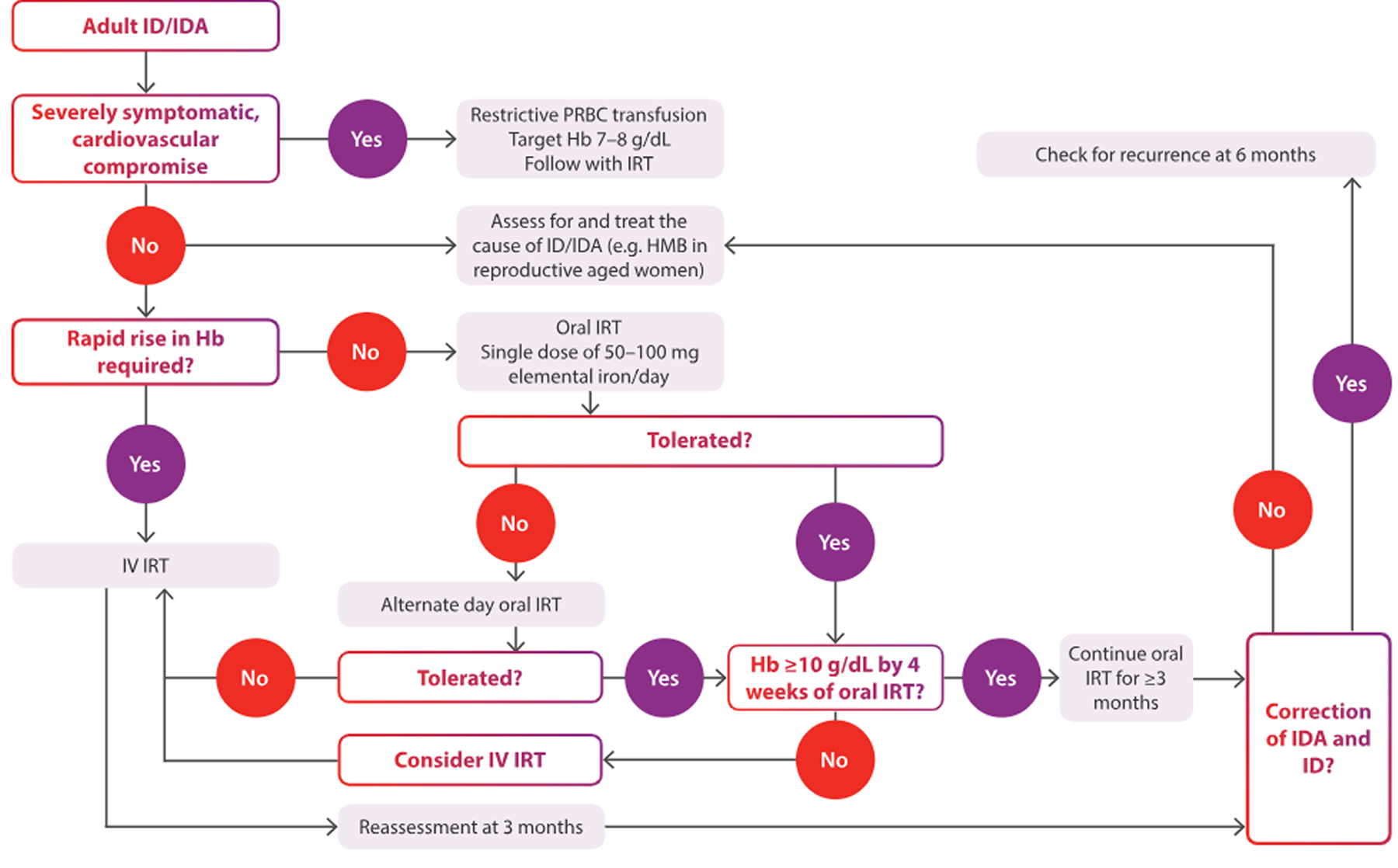
Effective treatment should correct anaemia and replenish iron stores4 

medication icon

Oral iron is the first-line treatment for iron deficiency (ID)/iron deficiency anaemia (IDA) but may not be appropriate for all patients4

iron bottle

IV iron is indicated when there is intolerance to oral iron or an inadequate response, or rapid iron delivery is required. ID diagnosis must be based on laboratory tests5

week

If patients do not respond to oral iron therapy (i.e. an Hb increase <1 g/dL by 4 weeks) consider switching to IV iron4

Clinical guidelines support IV iron treatment for ID/IDA in women4,6,7
person icon
Otherwise healthy women with ID/IDA

European Hematology Association guidelines

IV iron should be considered when:

  • there is intolerance to oral iron or lack of compliance
  • there is an inadequate response to oral iron (Hb increase <1 g/dL by 4 weeks)
  • rapid iron delivery is required
IV iron icon
Women with abnormal uterine bleeding

European Hematology Association guidelines

IV iron treatment is recommended in women with abnormal uterine bleeding 

Pregnancy
Pregnancy

British Society for Haematology guidelines5 

In pregnancy, IV iron should be considered:

  • from the second trimester onwards for women with confirmed IDA who are intolerant of, or do not to respond to, oral iron
  • in women who present after 34 weeks' gestation with confirmed IDA and Hb <10 g/dL


IV iron products should not be used during pregnancy unless clearly necessary. IV iron treatment should be confined to the 2nd and 3rd trimester if the benefit is judged to outweigh the potential risk to mother and the foetus.7


heart in hand icon
Postpartum

British Society for Haematology guidelines5

IV iron should be considered postpartum: 

  • in women who are previously intolerant of, or do not respond to, oral iron
  • where the severity of symptoms of anaemia requires prompt management 
L2VuL3RyZWF0bWVudA==